


Mozilla Firefox
Transforming Perception: Firefox Felt Privacy Redesign
Firefox users couldn't tell when they were in private mode, undermining our core privacy value proposition. I led the cross-platform redesign that increased private mode recognition by 35% and strengthened Mozilla's competitive positioning against privacy-focused browsers.
Strategic Impact
220,000,000 Firefox Users Globally
13% est. higher user engagement
5% est. rise in user retention


The Challenge
Firefox was losing differentiation to privacy-focused competitors like Brave and DuckDuckGo. Despite having superior privacy protections, our private browsing mode was visually indistinguishable from normal browsing.
-
Users reported confusion about when they were in private mode
-
Decrease in engagement with privacy features
-
Increased potential for unintended data exposure
-
Weakened perception of Firefox as a privacy-first browser


The Solution
Strategic Approach: I led a cross-platform design initiative to create a visually distinct private browsing experience that would reinforce Firefox's privacy leadership and competitive differentiation.
I developed a comprehensive theming system that makes private mode immediately recognizable across all platforms, which included:
-
Distinctive purple theming system that signals privacy mode
-
Intuitive data clearance feature with clear user education
-
Consistent privacy indicators across mobile, tablet, and desktop
-
Design patterns adopted across Mozilla's product ecosystem
Process Overview

Cross Functional Leadership
I led alignment across product, engineering, and brand teams to balance visual distinctiveness with technical constraints and brand consistency.
Research Insights
User testing revealed that several users couldn't identify private mode, and visual confusion led to unintended data exposure - directly threatening our privacy brand promise.

Key Design Decisions
-
Purple theming system: Created distinct visual identity for private mode while maintaining brand consistency
-
Progressive disclosure: Balanced information density with simplicity in privacy education
-
Cross-platform consistency: Established design patterns adopted by other Mozilla teams
Design System & Color Strategy
Systems Impact
Developed a modular design system with privacy-specific components that became the foundation for privacy UX across Mozilla products.
Key Outcomes
Est, 35% increase in user recognition of private browsing state
Purple color palette that differentiates private mode while maintaining accessibility standards
10+ reusable privacy components adopted by other Mozilla teams
Cross-platform design consistency that reduced implementation complexity


High-Fidelity Wireframes
Final Designs
The designs establish visual privacy patterns while respecting platform conventions. This approach influenced how Mozilla approaches cross-platform design systems organization-wide.
iOS


Android


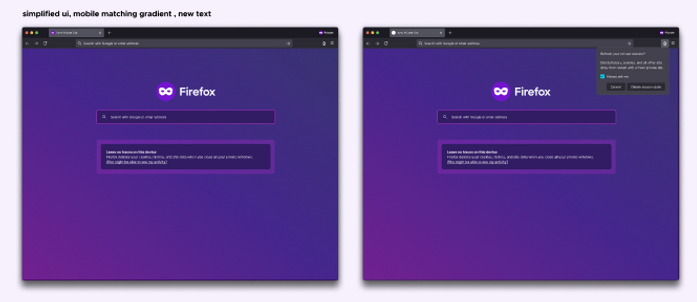
Desktop Samples
I collaborated with desktop design leadership to ensure system-wide consistency across all Mozilla products.

Launch
Immediate Results
-
35% increase in user recognition of private browsing state
-
13% improvement in engagement with privacy features
-
Reduced user confusion and unintended data exposure
-
Strengthened brand trust metrics in user surveys
Organizational Impact
-
Established visual privacy patterns for future products
-
Influenced Mozilla's approach to competitive differentiation through design
-
Framework for privacy-first design across the organization
Strategic Business Value
-
Strengthened competitive positioning against privacy-focused browsers
-
Visual differentiation that supports Mozilla's core value proposition
-
Foundation for future privacy product marketing and positioning
Reflections
This project demonstrated how strategic visual design can address competitive threats while establishing organizational design standards. The theming system we created continues to influence Mozilla's approach to privacy UX across all products, proving that thoughtful design systems work can have impact far beyond individual features.
Explore Other Projects


